
Why Stok Kangri Trek is on every trekker's list
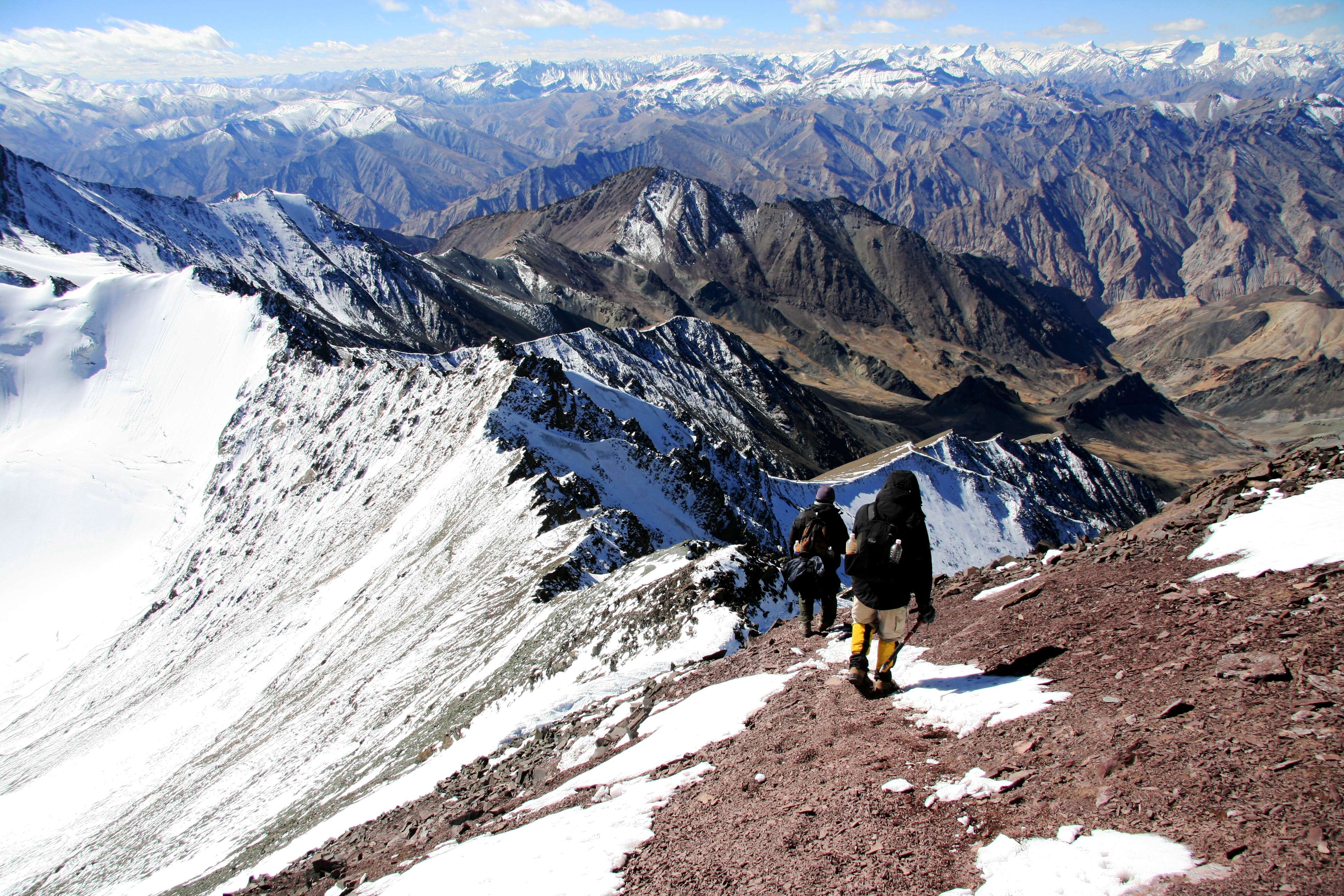
Standing at 6,153 metres above sea level, Stok Kangri is one of the most accessible 6000m+ peaks in India — and arguably the finest high-altitude objective that Ladakh has to offer. Located in the Stok Range, a short drive south of Leh, this summit draws serious trekkers from across the globe who want a genuine high-altitude mountaineering experience without the logistical complexity of the greater Himalayan giants.
The Stok Kangri trek is not a walk in the park. It demands real physical fitness, prior experience above 4500m, crampons, an ice axe, and a healthy respect for altitude. But for those who are prepared, the reward is extraordinary: a 360-degree panorama of the Karakoram, the Zanskar Range, and the vast high-desert plateau of Ladakh stretching to the horizon. In 2026, with improved permit infrastructure and a well-established guiding ecosystem around Leh, there has never been a better time to attempt this iconic summit.
Few mountains in the Indian Himalaya offer what Stok Kangri does: a genuine 6000m summit that a well-prepared trekker — not just a professional mountaineer — can realistically stand on. Here is why it consistently ranks among the top high-altitude objectives in South Asia.
Accessibility from Leh. Leh has a functioning airport (Kushok Bakula Rimpochhe Airport) with regular flights from Delhi, Srinagar, and Jammu. Stok Village, the trek's starting point, is roughly 15 km from Leh by road. You can land in Leh, acclimatise for two days, and begin the trek — no week-long drive to a remote trailhead.
A true 6000m summit without extreme technical demand. Stok Kangri is often described as a "trekking peak" — though that label can be misleading. The upper section involves glacier travel, fixed ropes on some seasons, and a steep final ridge. It is, however, achievable without prior technical climbing experience if you are fit, have an ice axe and crampons, and are guided by a competent local guide.
Spectacular panoramic views. On a clear summit morning, the view encompasses the white teeth of the Karakoram to the north, the deep valleys of the Zanskar Range to the south, and the ancient monastery-studded landscape of Ladakh below. Trekkers often describe it as among the finest summit vistas in the Indian Himalaya.
Cultural depth. The route passes through Stok Village, home to the Stok Palace (residence of the King of Ladakh), and runs through landscapes shaped by centuries of Buddhist culture. Interacting with local communities en route adds a dimension that purely technical climbs often lack.
Gateway to bigger objectives. Many trekkers use Stok Kangri as a stepping stone before attempting Himalayan peaks above 7000m. The experience of managing altitude, glacier terrain, and an early-morning summit push is directly transferable to harder objectives.
Further reading: Best Treks in Ladakh | Ladakh Trekking Guide
At a glance
Ask TrekSage about Stok Kangri Trek
Get instant answers grounded in verified trek data — beginner-friendliness, best months, permits, packing, and more.
The route at a glance
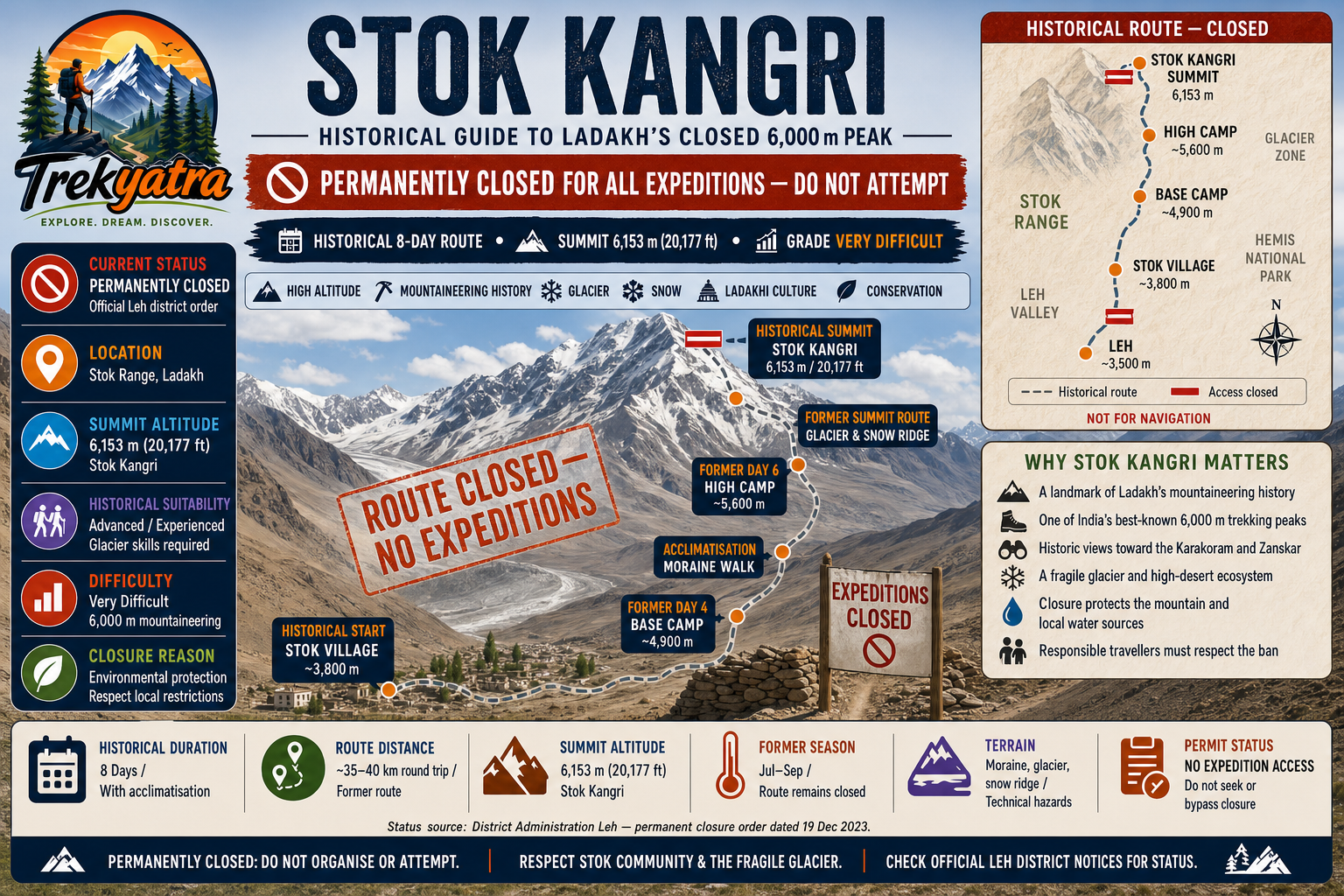
The Stok Kangri trek is an approximately 35–40 km round trip from Stok Village, though most trekkers cover additional distance on acclimatisation walks in Leh. The elevation profile is dramatic: you start in Leh at roughly 3,500m, climb to Stok Base Camp at approximately 4,900m, push to High Camp at around 5,600m, and then make the final ascent to the summit at 6,153m.
Terrain types encountered:
- Lower trail (Stok Village to Base Camp): Rocky jeep tracks, river crossings, open scree slopes, and alpine meadows. Relatively straightforward but altitude begins to bite.
- Base Camp to High Camp: Steeper rocky terrain transitioning to moraine fields. Navigation requires care in poor visibility.
- High Camp to Summit: The most demanding section. Involves crossing a glacier (crampons essential), navigating moraine ridges, and a steep final push up a snow/ice ridge to the summit.
The route is well-trodden during peak season, but trail markers are sparse above High Camp and whiteouts can disorient even experienced trekkers.
Stok Kangri Base Camp
Stok Base Camp sits at approximately 4,900m in a broad glacial valley below the main peak. It is the operational heart of any Stok Kangri attempt — a place to sleep, eat, and let your body catch up with the altitude before the push higher.
The camping area is relatively flat with good space for tents. Water sources include glacial meltwater streams — they flow reliably through July, August, and September but should always be treated or filtered before drinking. Views from base camp are already impressive: the Stok Kangri massif dominates the skyline, and on clear mornings the Karakoram peaks are visible to the north.
Most trekking parties spend at least one full rest or acclimatisation day at base camp, doing short walks to higher elevations (such as towards the moraine above camp) before returning to sleep low. This acclimatisation discipline is not optional at these altitudes — it is the single most important factor in summit success and safety.
Summit Day Route
Summit day typically begins at 1:00–2:00 AM from High Camp (approximately 5,600m). The early start is deliberate: afternoon weather on high Ladakhi peaks can deteriorate rapidly, and you want to summit and be well on your descent before noon.
From High Camp, the route crosses a glacier (crampons and ice axe mandatory), climbs through a section of moraine, and then tackles the final ridge. Fixed ropes may be in place on the steepest sections, particularly on the final 50–100 vertical metres — their presence and condition varies by season and should be verified with your guide or operator before departure.
The round trip from High Camp to summit and back typically takes 8–12 hours, depending on conditions, fitness, and group size. Summit altitude of 6,153m means even acclimatised trekkers will feel the thin air sharply on the final push.
Descend to base camp (or Stok Village) the same day. Spending an extra night at High Camp after summit is generally not recommended unless conditions force it.
What each day actually looks like
Below is a recommended 8-day itinerary for the Stok Kangri trek in the 2026 season. Do not compress this schedule — rushing the acclimatisation phase is the leading cause of failed summits and medical evacuations on this route.
| Day | Route | Distance | Altitude | Highlights |
|---|---|---|---|---|
| 1 | Arrive Leh — rest | — | 3,500m | Arrive, unpack, hydrate, no exertion |
| 2 | Leh acclimatisation | Short walks only | 3,500m | Namgyal Tsemo Gompa, Shanti Stupa walk |
| 3 | Leh to Stok Village | ~15 km by road + 3–4 km walk | 3,500m → ~3,800m | Stok Palace, first trail views |
| 4 | Stok Village to Base Camp | ~10–12 km | ~3,800m → ~4,900m | River crossings, alpine meadows |
| 5 | Base Camp acclimatisation | 3–5 km walk | ~4,900m | Moraine exploration, rest, gear check |
| 6 | Base Camp to High Camp | ~4–5 km | ~4,900m → ~5,600m | Glacier approach, moraine terrain |
| 7 | Summit push + descend to Base Camp | ~12–15 km | ~5,600m → 6,153m → ~4,900m | Summit 6153m, glacier crossing |
| 8 | Base Camp to Leh | ~10–12 km trek + road | ~4,900m → 3,500m | Descent, Leh arrival, celebration |
Note: Some operators run 9 or 10-day programmes with an additional acclimatisation day at base camp or a buffer day for weather. If your fitness or acclimatisation on Day 5 is not satisfactory, do not proceed to High Camp — the extra day could save your summit.
See also: High Altitude Trekking Tips
When to go
The Stok Kangri trek season runs from July to September. Outside this window, the upper mountain is under heavy snow, permits may not be issued, and conditions are dangerous.
July: The route is viable but typically still carries significant snow above base camp. Nights are bitterly cold and the glacier can be icy and less predictable. It is less crowded than August, which suits some trekkers. Summit success rates tend to be lower in early July.
August (Peak Season): Generally the best month for stable weather, consolidated snow on the glacier, and the widest operational window. Base camp and high camp are busy — expect other parties. Temperatures at base camp range from roughly 5°C to 15°C during the day and can drop to -5°C to -10°C at night. Summit temperatures can fall to -15°C to -20°C or lower with windchill.
September: A quieter alternative. Weather windows remain reasonable in early-to-mid September, but by late September the risk of early winter snowfall increases sharply. An unexpected snowfall can close the route. Experienced, self-sufficient parties often prefer the solitude of September.
October–June: Avoid. The upper mountain is heavily glaciated and avalanche-prone, temperatures are extreme, and permits are typically not issued for this period.
Is this trek right for you?
Grade: Difficult / Strenuous (equivalent to AD in the Alpine grading system for the upper sections).
Stok Kangri is not suitable for beginners. To have a safe, successful experience, you should meet the following criteria:
- Prior trekking experience above 4,500m — ideally above 5,000m. Treks like the Markha Valley Trek (which crosses the Kongmaru La at ~5,200m) are good preparation.
- Comfort with basic glacier travel — you must be able to walk confidently in crampons, self-arrest with an ice axe, and move as part of a roped team if required.
- Physical fitness for 6–10 hour walking days at high altitude, including summit day which can stretch to 12 hours.
Training Recommendations (8–10 weeks before departure):
- Cardio base: running, cycling, or stair climbing 4–5 days per week, building to 60+ minutes of sustained effort
- Strength: legs, core, and shoulders (for trekking poles and ice axe work)
- Altitude simulation: if accessible, altitude training masks or chambers can help, though real acclimatisation on the mountain is irreplaceable
Comparison with other Ladakh treks:
- The Markha Valley Trek is a challenging but non-technical trek that serves as excellent preparation.
- The Chadar Trek (frozen Zanskar River) is extreme in terms of cold but does not involve glacier climbing or this altitude.
- Stok Kangri sits at the top of the accessible trekking-peak difficulty spectrum in Ladakh.
What permits you need
This is one of the most regulated treks in Ladakh. Ensure all permits are in order before you leave Leh — failure to present correct documentation can result in being turned back.
1. Inner Line Permit (ILP)
Required for all Indian and foreign nationals to access restricted border areas of Ladakh. In 2026, the ILP can be obtained:
- Online: Via the official Ladakh e-Permit portal (verify current URL with Leh DC office)
- In person: Leh District Collectorate (DC) Office
- Cost:
2. Hemis National Park Entry Permit
The Stok Kangri route passes through Hemis National Park. An entry permit is required.
- Obtained: At the park entry checkpoint or Leh Forest Department office
- Cost: Foreign nationals typically pay a higher rate.
3. Mountaineering Permit (IMF / JKMI)
Because Stok Kangri exceeds 6,000m, a mountaineering permit is mandatory. This can be obtained through:
- Indian Mountaineering Foundation (IMF), New Delhi
- Jammu & Kashmir Mountaineering Institute (JKMI)
- Cost: Approximately INR 2,000–4,000 per person
- Lead time: Apply at least 2–4 weeks before your trek start date. IMF applications can be submitted online via the IMF website; JKMI handles local processing in Ladakh.
- Guide requirement: The mountaineering permit system is linked to a requirement for a registered/certified guide for summit attempts. Solo unguided attempts may not receive permit approval.
Recent regulatory changes (2025–2026): Authorities have periodically adjusted daily trekker quotas on the Stok Kangri route to reduce environmental pressure on the glacier and base camp area. Book your guide and permits well in advance during peak season.
What this trek will cost you
Costs below are indicative for the 2026 season and are in INR. Exchange rates will affect international trekkers.
| Cost Item | DIY Estimate (INR) | Guided Package (INR) |
|---|---|---|
| Leh–Delhi flights (return) | 8,000–20,000 | 8,000–20,000 |
| Leh accommodation (2 nights) | 1,500–4,000 | Included |
| Stok Village to Base Camp transport | 500–1,500 | Included |
| ILP permit | 200–500 | Included |
| Hemis NP permit | 200–500 | Included |
| IMF/JKMI mountaineering permit | 2,000–4,000 | Included |
| Guide fees (7–8 days) | 5,000–10,000 | Included |
| Porter fees (optional) | 3,000–6,000 | Included (varies) |
| Food & camping (7–8 days) | 4,000–8,000 | Included |
| Gear rental (crampons, ice axe, sleeping bag) | 2,000–5,000 | Included |
| Total (excluding flights) | ~15,000–25,000 | ~18,000–35,000 |
DIY notes: The lower end assumes budget accommodation, self-cooked meals where possible, shared transport, and renting rather than buying technical gear in Leh. Several gear rental shops operate on the main market road in Leh.
Guided package notes: Packages from established operators typically include permits, guide, porter, all meals from Day 3 onward, camping equipment (tent, sleeping mat), and emergency support. Excluded from most packages: flights to Leh, personal travel insurance, personal gear, tips, and alcoholic beverages. Always confirm what is included in writing before booking.
See also: Trekking Gear Essentials India
What to pack
Packing right for Stok Kangri is a matter of safety, not just comfort. The following is a comprehensive gear list.
Clothing Layers
- Base layer: Moisture-wicking thermal top and bottom (merino wool or synthetic)
- Mid layer: Fleece jacket and insulated down jacket (minimum 600-fill)
- Hard shell: Waterproof, windproof jacket and trousers (Gore-Tex or equivalent)
- Summit gloves: Insulated mountaineering gloves + liner gloves
- Balaclava and warm hat
- Neck gaiter
- Thermal socks (3–4 pairs, wool preferred) + liner socks
- Gaiters (essential for glacier and scree)
Footwear & Technical Gear
- High-altitude mountaineering boots — must be crampon-compatible (double boots preferred for summit day)
- Crampons — 12-point, compatible with your boots
- Ice axe — standard walking/trekking length
- Trekking poles — collapsible, with wrist straps
- Harness + carabiner — if fixed ropes are in use (confirm with guide)
Camping & Sleep
- Sleeping bag rated to -20°C — non-negotiable for summit night
- Sleeping mat — insulated inflatable preferred
- Headlamp + spare batteries (cold drains batteries fast)
Navigation & Safety
- Trekking map / GPS device or downloaded offline map
- Whistle, emergency bivouac bag
- First-aid kit: blister care, pain relief, rehydration sachets, Diamox (if prescribed), altitude sickness medication, compression bandage
Nutrition & Hydration
- High-altitude snacks: energy gels, nuts, chocolate, dried fruit
- Water bottles / hydration bladder (minimum 2 litres capacity)
- Water purification: tablets or filter
- Electrolyte sachets
Sun & Eye Protection
- Glacier sunglasses (Category 4, side shields) — essential on glacier
- High-SPF sunscreen (SPF 50+) and lip balm
- Sun hat
Documents Checklist
- Original government-issued ID / passport
- ILP permit (printed copy)
- Hemis NP permit (printed copy)
- IMF/JKMI mountaineering permit (printed copy)
- Travel insurance documents with emergency contact numbers
- Emergency contact card (local guide's number, SNM Hospital Leh)
Gear rental in Leh: Crampons, ice axes, sleeping bags, and trekking poles are available for rent from several shops on Fort Road and the main bazaar in Leh. Quality varies — inspect all rented gear carefully before accepting it.
Staying safe on the mountain
At 6,153m, Stok Kangri is at an altitude where Acute Mountain Sickness (AMS), High Altitude Pulmonary Oedema (HAPE), and High Altitude Cerebral Oedema (HACE) are real risks. Acclimatisation is not a luxury — it is a survival strategy.
The Golden Rules:
1. Climb high, sleep low. On acclimatisation days, walk to higher elevations and return to a lower camp to sleep.
2. Never ascend more than 300–500 vertical metres per sleeping day above 4,000m.
3. Listen to your body. Headache, nausea, loss of appetite, and disturbed sleep are early AMS warning signs. Stop ascending until symptoms resolve.
4. Hydrate constantly. Aim for 3–4 litres of water per day at altitude.
Mandatory 2 rest days in Leh (3,500m): Do not skip this. Fly into Leh and rest. Your first 48 hours should involve minimal exertion — short, flat walks only. Your body is adjusting to an altitude that is already higher than most peaks in Europe.
Diamox (Acetazolamide): A prescription medication that can help with acclimatisation by stimulating breathing. Consult your doctor before your trip — it is not suitable for everyone and has side effects. It is not a substitute for proper acclimatisation.
When to turn back immediately:
- Severe or worsening headache that does not respond to paracetamol and hydration
- Vomiting, inability to eat or drink
- Loss of coordination (ataxia) — a sign of HACE
- Breathlessness at rest, wet cough, gurgling sounds in chest — signs of HAPE
- Confusion, unusual behaviour
If in doubt, descend immediately. Every hundred metres of descent helps. Do not wait to see if symptoms improve at altitude.
Deep dive: Altitude Sickness Prevention Guide
Weather windows: Check forecasts daily. Afternoon thunderstorms and sudden whiteouts are common on Ladakhi peaks in July and August. Always aim to summit and begin descent before noon.
Solo vs. guided: While technically possible for experienced alpinists, attempting Stok Kangri without a certified local guide is strongly discouraged. Route-finding on the glacier is complex, permit regulations increasingly require a registered guide, and in an emergency, a guide's local knowledge can be the difference between life and death.
Travel insurance: Mandatory. Ensure your policy specifically covers high-altitude mountaineering (above 6,000m) and helicopter rescue. Standard travel insurance does not cover mountaineering. Confirm the altitude limit in your policy document.
Helicopter rescue: In a genuine medical emergency, helicopter rescue from the Stok Kangri area is possible but not guaranteed due to weather and altitude limitations. Notify your guide immediately if a team member shows serious AMS symptoms. Your guide should carry a communication device (satellite phone or satellite messenger) for emergencies.
Common risks:
- AMS, HAPE, HACE — manage through acclimatisation and immediate descent if symptomatic
- Frostbite — proper layering and glove management on summit day; keep extremities moving
- Whiteouts and route disorientation — never ascend in poor visibility
- Crevasse risk — glacier travel always carries crevasse risk; roping up may be necessary depending on conditions
- Rock falls on moraine sections — wear your helmet above base camp
Key emergency contacts (verify current numbers before travel):
- SNM Hospital Leh (Sonam Norboo Memorial Hospital): +91-1982-252014
- SDRF Ladakh (State Disaster Response Force): Contact via local police or Leh DC Office
- Indian Mountaineering Foundation (IMF): +91-11-24110750
- Local Police Emergency: 112
See also: Leh Ladakh Travel Guide
Similar treks to explore
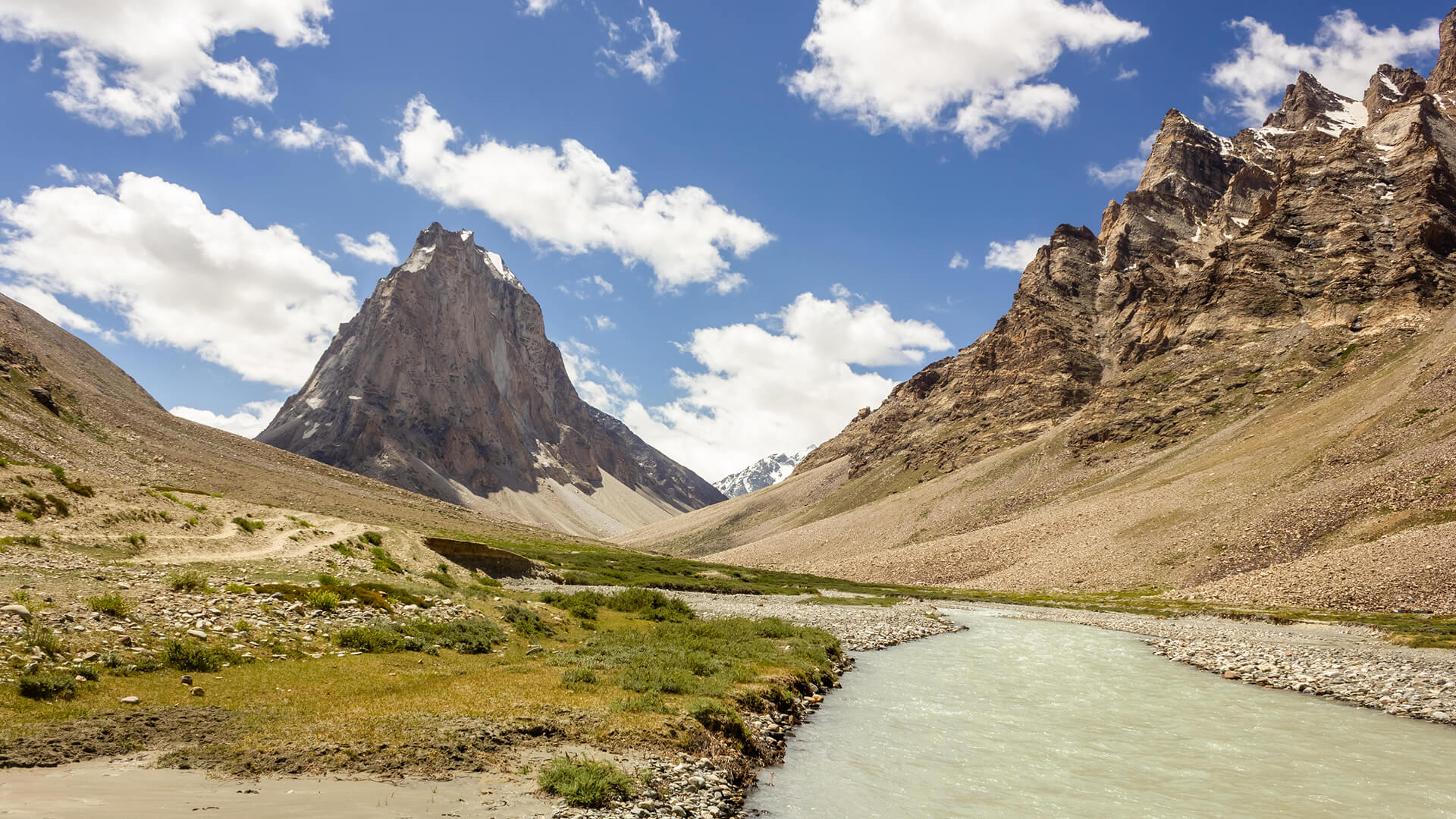
Padum to Darcha Trek: Complete High-Altitude Route Guide
The Padum to Darcha trek covers ~115–120 km in 8–9 days, crossing Shingo La (~5,060 m) between Zanskar and Lahaul.
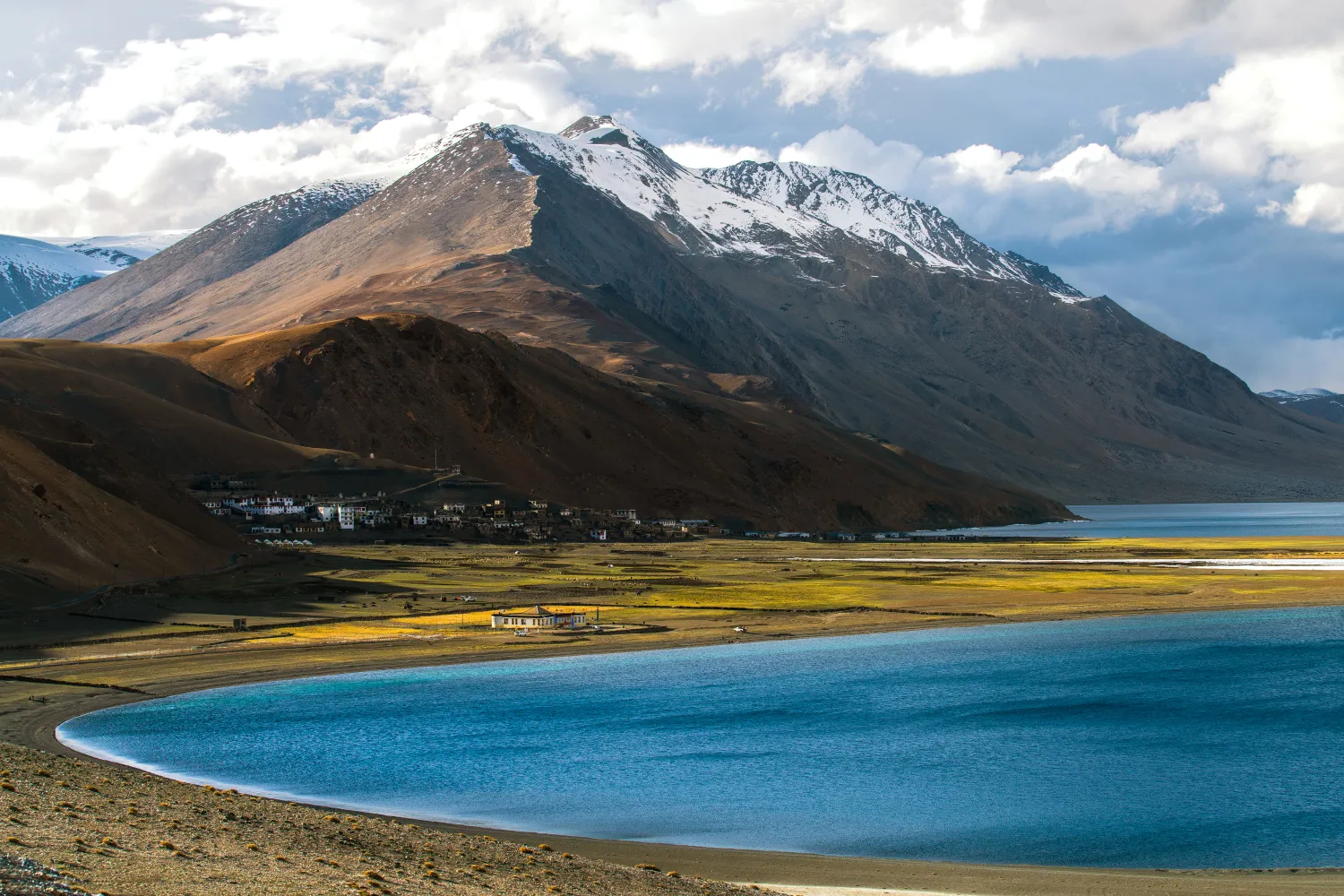
Rumtse to Tso Moriri Trek: Complete Ladakh Trail Guide
The Rumtse to Tso Moriri trek is an ~80 km, 7–8 day strenuous Ladakh trail crossing Kyamar La (~5,460 m) and Polokongka La (~5,190 m), ending at Tso Moriri Lake
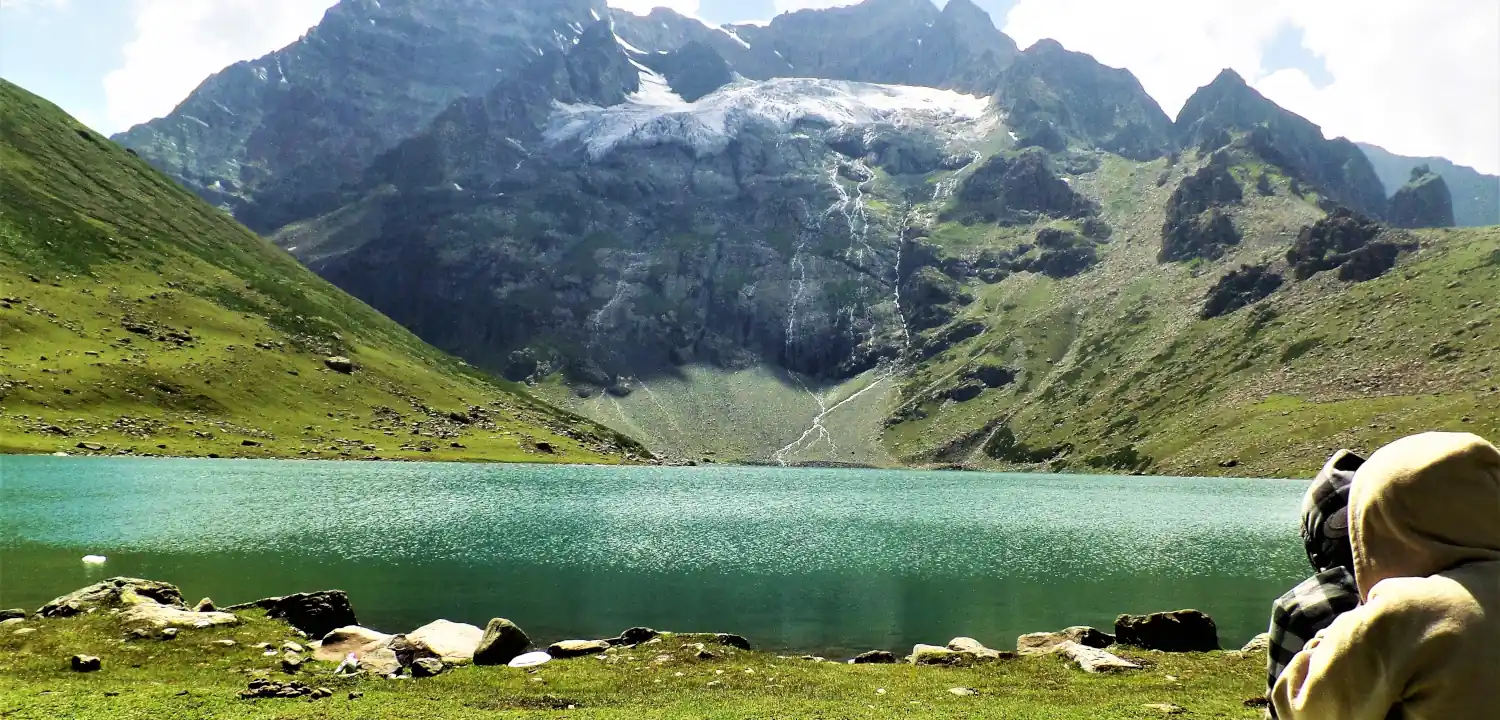
Naranag Gangabal Trek: Complete Guide (2026)
The Naranag Gangabal Trek is a 4–5 day moderate-difficult alpine trek in Kashmir, covering ~26–30 km from Naranag (2,150 m) to Gangabal Lake (3,570 m).
Common questions answered
No. Stok Kangri is not a beginner trek. The summit day involves glacier travel, crampons, an ice axe, and a pre-dawn ascent to 6,153m — conditions that demand prior high-altitude experience and basic mountaineering skills. Most trek operators recommend that applicants have completed at least one multi-day trek above 4,500m before attempting Stok Kangri. If you are new to high-altitude trekking, consider building experience with treks like the Markha Valley Trek first.
Live Conditions
Real-time weather & trail status
Trail Conditions
Crowdsourced reports from trekkers who've done this route
Sign in to add a trip report
Find a Trek Buddy
Connect with trekkers planning the same route
No buddies yet for this trek
Sign in and be the first to post a planning signal.